
Tassomai vs. Medly AI: low-stakes daily micro-habits vs. direct-to-consumer chatbot tutoring

The rapid rise of artificial intelligence has sparked a wave of direct-to-consumer study tools aimed at pupils and parents. Promising round-the-clock AI homework assistance, platforms such as Medly AI have marketed themselves directly to families as an affordable alternative to traditional private tuition.
Medly relies on conversational chatbots and open-text AI marking to guide secondary and A-Level pupils through practice prompts.
However, when school leadership teams and heads of department evaluate technology for whole-school deployment, consumer chatbot applications present major pedagogical and operational hurdles.
While conversational AI tools appeal to individual pupils looking for quick homework help, they are not engineered to build structured, school-wide learning habits or provide senior leadership with reliable, specification-aligned diagnostic data.
Understanding the difference between a consumer AI chatbot application and an educator-led teaching and learning ecosystem enables school leaders to choose technology that delivers lasting academic progress.
At a glance
Tassomai and Medly AI compared
| Dimension | Tassomai | Medly AI |
|---|---|---|
| Primary purpose | Whole-school teaching and learning ecosystem | Direct-to-consumer AI tutor subscription |
| Learning mechanics | Pure active recall with concise AI guidance (Mai) | Conversational chatbot threads and open-text dialogue |
| Practice friction | Fast, focused 10-minute daily micro-goals | Text-heavy chat streams and lengthy interactions |
| Delivery model | One school subscription across 10+ subjects | Individual monthly subscription per pupil |
| Teacher analytics | Visual Dots Grids, Trees and real-time gap reports | Free teacher dashboard with class heatmaps |
| Equity and intervention | Dedicated tracking for Pupil Premium, SEND and EAL | Built around individual pupil subscriptions |
Learning design
Conversational friction vs low-stakes retrieval practice
How a pupil interacts with digital practice determines whether they develop independent, exam-ready recall or become dependent on conversational prompts.
Medly operates primarily as an interactive AI chat partner. When a pupil attempts a question, the platform uses an open-text chatbot interface to provide guidance. While chatting with an AI model can feel novel, open-text dialogue introduces significant cognitive friction:
- Chatbot friction and screen fatigue: Typing back and forth with a conversational AI model slows down practice, turning simple revision into lengthy, text-heavy chat threads.
- Over-reliance on prompts: Conversational tutors constantly provide hints, leading questions and structural guidance. This creates a safety net that prevents pupils from building unprompted, independent recall under real examination conditions.
- Marking consistency risks: Generative AI models evaluating open-text pupil answers can struggle with marking consistency, occasionally misinterpreting pupil phrasing against strict UK exam board mark schemes.
Tassomai is built specifically around pure active recall and low-friction micro-habits.
Instead of forcing pupils into wordy chat conversations, Tassomai delivers short 10-minute daily micro-sessions. Every question forces the brain to pull facts directly from memory without suggestive hints. When a mistake occurs, our built-in AI tutor, Mai, delivers concise, step-by-step guidance tailored specifically to UK exam board mark schemes, ensuring pupils learn the exact terminology required for GCSE success.
Who it is built for
Parent subscription funnels vs whole-school partnership
Procurement priorities differ dramatically between consumer-facing subscription apps and institutional school software.
Medly is built as a direct-to-consumer subscription model, with paid plans charged per pupil each month. Because its business model relies on individual parent payments, its product design prioritises consumer marketing, pupil-facing features and direct subscription sign-ups rather than school-wide teaching and learning workflows.
Tassomai is a dedicated institutional school partner designed to support teachers, departments and senior leadership teams.
A single Tassomai school subscription provides multi-subject coverage across Science, Mathematics, English Literature, English Language, History, Geography, Computer Science and MFL. Tassomai works alongside school staff to lower total EdTech costs, automate homework management and ensure high daily engagement across all year groups.
Data for leaders
Data and accountability: class dashboards vs whole-school SLT analytics
To drive meaningful intervention, senior leaders and department heads need clear, actionable data that reflects genuine classroom understanding.
Medly has added a free dashboard for teachers, who can set homework, review AI marks and view class mastery heatmaps. But because the product is built around individual pupil subscriptions and chat-based practice, it is not designed as a whole-school system for tracking intervention cohorts across every subject.
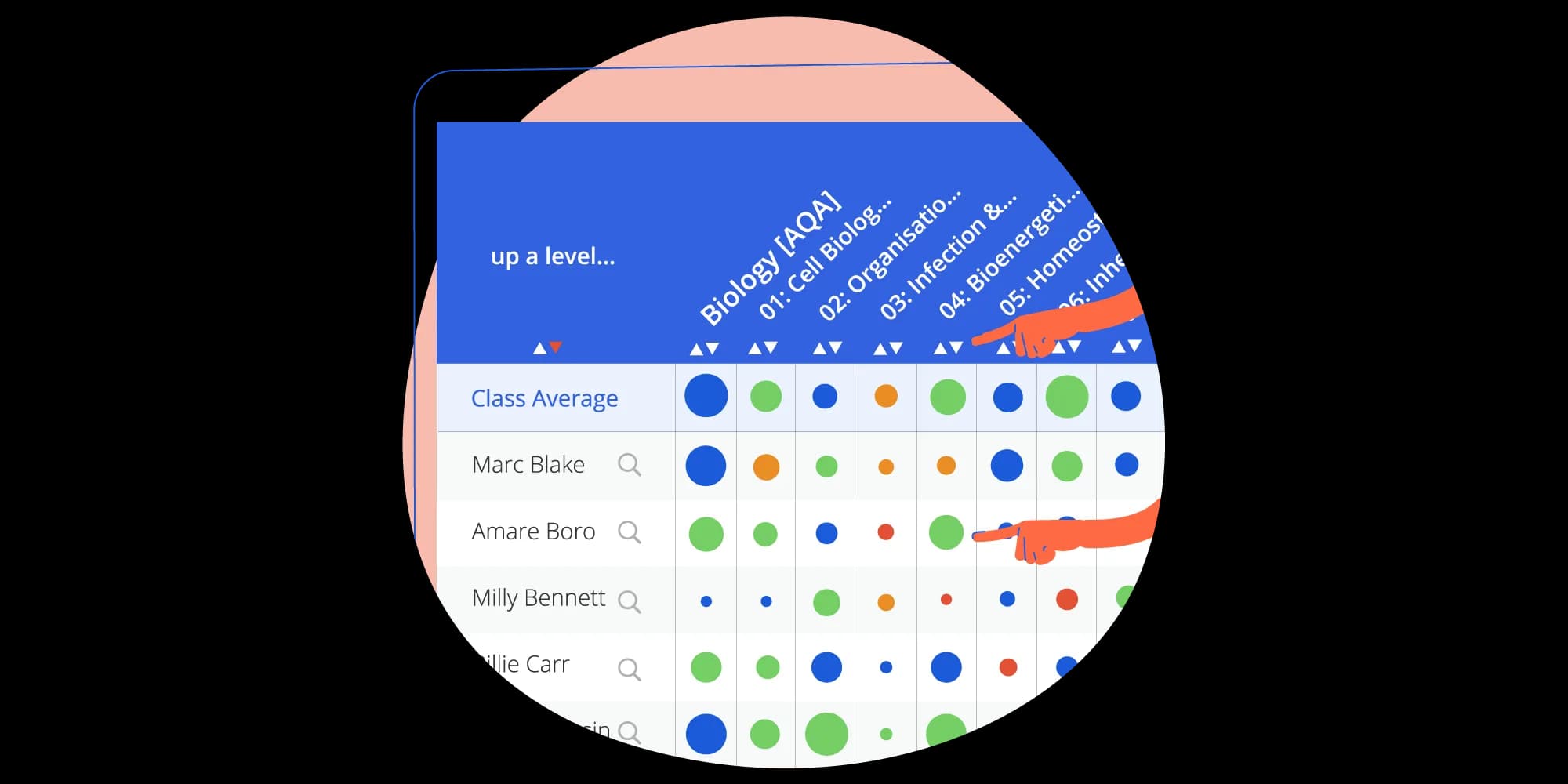
Tassomai provides senior leadership with a central, real-time diagnostic engine. Teachers access live visual maps showing exact topic accuracy and knowledge gaps across classes, subjects and year groups. Live tools like Group Quiz project instant starter activities onto classroom screens, while purpose-built reporting workflows specifically track and support Pupil Premium, SEND and EAL pupils.
Comparing other platforms too? See how Tassomai compares with Sparx, Up Learn and generic AI homework solvers.
Frequently asked questions
Open-text AI chatbots rely on generative language models that can rephrase explanations inconsistently or misinterpret exam board mark schemes. Tassomai’s adaptive engine combines verified specification content with concise AI guidance, ensuring pupils learn exact exam board keywords without the risk of AI hallucination.
Tassomai keeps practice short and focused. Pupils complete clean 10-minute daily goals that respect working memory and time. By avoiding long videos, text walls and conversational chat threads, Tassomai builds a sustainable daily routine that pupils stick with all year.
Tassomai integrates directly with major UK school information systems, allowing administrative teams to onboard year groups, sync class lists and track engagement effortlessly.
Ready to equip your school with a proven daily retrieval engine rather than consumer chatbot apps?
Tagged: Retrieval practice, Teachers, Teacher dashboard