
Tassomai vs. Up Learn: Sustainable daily micro-habits vs. high-cost video cramming

As secondary school leaders search for digital solutions to boost GCSE and A-Level performance, they encounter two starkly different approaches to EdTech.
On one side stand high-intensity consumer tutoring platforms like Up Learn. Marketed heavily to affluent parents and selective Sixth Forms with high-ticket price tags and grade guarantees, Up Learn centres its model on video lessons, practice papers, and heavy time commitments.
Key takeaways
- Up Learn focuses on heavy video instruction requiring two hours per week per subject, which can cause cognitive fatigue and low completion rates.
- Tassomai builds sustainable daily habits with a ten-minute daily active retrieval practice across multiple core subjects, reducing study burnout.
- Up Learn requires manual task setting by teachers and is limited in curriculum scope, mainly covering A-Level and GCSE Science.
- Tassomai offers zero-setup automation for teachers, AI guidance via Mai, and visual diagnostic heatmaps for whole-school monitoring.
- Tassomai provides a single affordable contract covering over 10 core subjects, supporting equitable access across Key Stage 3 and 4 cohorts.
Pedagogical differences
How Tassomai’s sustainable daily micro-habits compare with Up Learn’s high-cost video
How much time a platform demands from a pupil determines whether home study becomes an embedded daily routine or a source of friction and study avoidance.
Up Learn’s core instruction model relies on structured video modules followed by practice quizzes. The platform explicitly advises schools to mandate a minimum of two hours of platform time per subject, per week.
For a secondary pupil managing eight to ten GCSE subjects, expecting hours of weekly video watching for a single subject creates severe cognitive fatigue:
- Passive Screen Time: Watching long instructional videos feels productive, but it often creates an illusion of understanding. Information flows passively into working memory without forcing the brain to construct long-term recall pathways.
- The High-Friction Time Burden: Expecting pupils to sit through lengthy video sessions at home leads to low completion rates, particularly among disadvantaged or lower-attaining cohorts who lack quiet study spaces.
- Lack of Multi-Subject Integration: Because video-heavy platforms consume so much time per topic, pupils cannot easily interleave practice across multiple subjects in a single evening.
Tassomai replaces lengthy video sessions with low-stakes, active retrieval.
Rather than asking pupils to watch hours of video content, Tassomai builds a sustainable ten-minute daily habit across all core subjects. The adaptive algorithm targets individual memory decay rates, dynamically spacing and interleaving questions to ensure knowledge moves into long-term schema without causing study burnout.
System architecture
The differences in teacher workload and school management between Tassomai and Up Learn
To justify investment, senior leadership teams need technology that provides clear diagnostic value without adding administrative burdens to teaching staff.
Up Learn operates primarily as a single-subject task platform. Teachers using its school dashboard must manually set assignments, select specific topic modules, and monitor time-spent metrics to verify whether pupils have watched assigned clips.
Tassomai operates as an automated, self-setting learning engine:
- Zero Setup for Teachers: Tassomai sets personalized daily goals for every pupil automatically across the entire examination specification, requiring no manual task curation from staff.
- Immediate AI Guidance via Mai: When a pupil stumbles during a quiz, Tassomai’s built-in AI tutor, Mai, provides instant, step-by-step explanations grounded in UK exam board mark schemes, resolving misconceptions on the spot without requiring pupils to watch a 15-minute video.
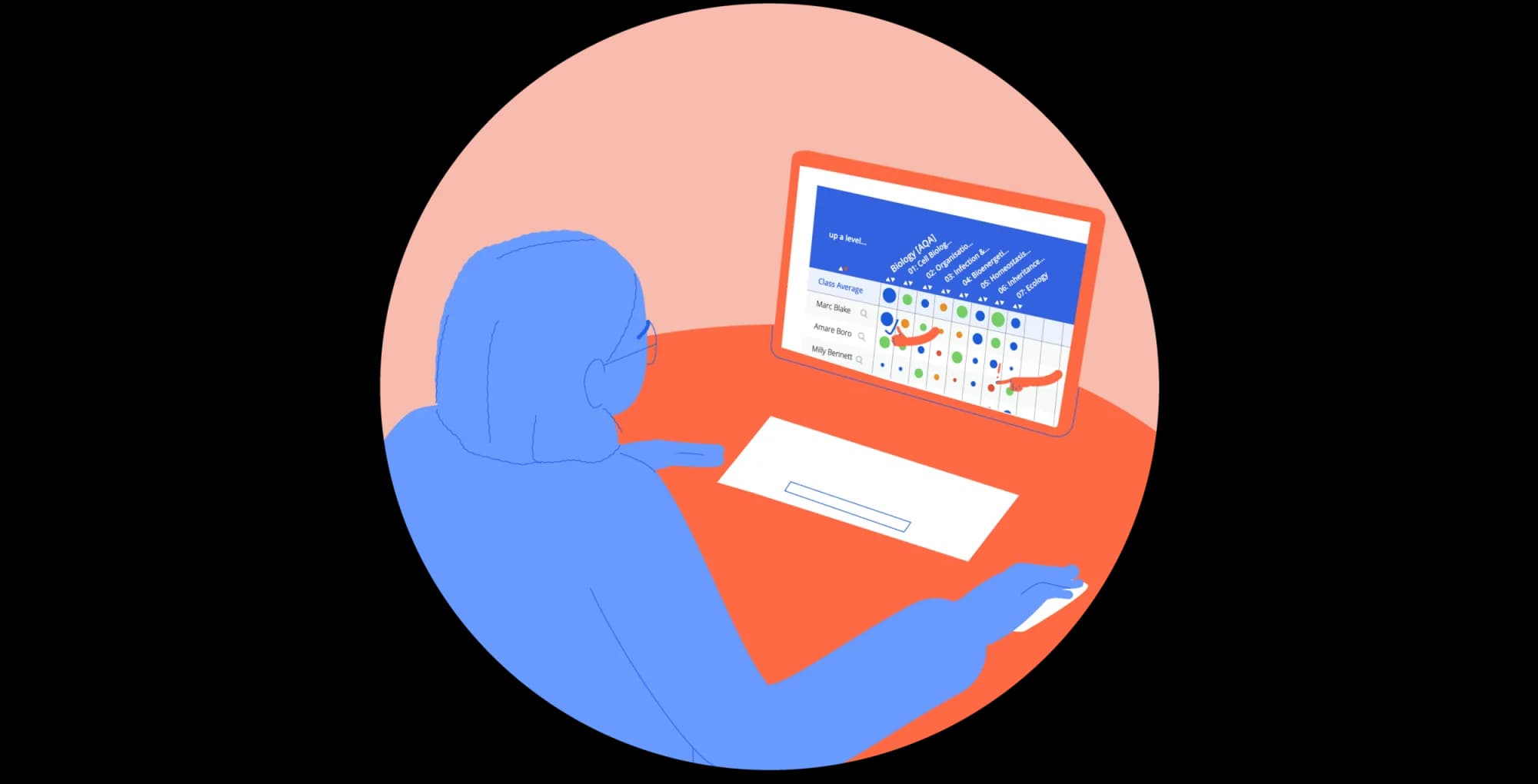
- Actionable Diagnostic Heatmaps: Tassomai’s Dots Grid and Tree reports replace time-spent logs with visual diagnostic heatmaps, showing department heads exact topic accuracy across entire year groups in real time.
Strategic value
How Tassomai’s whole-school access and affordability compare to Up Learn’s cohort silos
School procurement decisions must account for curriculum breadth, budget sustainability, and pupil equity.
Up Learn’s course library is narrow and top-heavy, focusing predominantly on A-Level subjects and GCSE Science. Because its pricing model is structured around specific cohorts or individual subject packages, funding access for a full secondary school becomes financially restrictive.
| Dimension | Tassomai | Up Learn |
|---|---|---|
| Learning Model | Low-stakes daily active recall (10 mins/day) | Heavy video instruction (2 hours/week/subject) |
| Homework Management | Fully automated (zero setup required from staff) | Manual task setting and module assignments |
| Curriculum Scope | 10+ core subjects across Key Stage 3 and Key Stage 4 | Narrow subject range focused on A-Level and GCSE Science |
| Support Engine | Immediate step-by-step AI guidance via Mai | Video explanations and text walk-throughs |
| Diagnostic Reporting | Granular topic accuracy heatmaps (Dots Grid & Trees) | Time-spent and module completion percentages |
| Accessibility & Equity | Single affordable contract for the whole school | High per-student cohort pricing |
Tassomai offers a single, cost-effective whole-school contract covering Science, Mathematics, English Literature, English Language, History, Geography, Computer Science, MFL, Business, and RS. By providing equal access across all Key Stage 3 and Key Stage 4 cohorts, Tassomai helps senior leaders close the attainment gap sustainably.
Frequently asked questions
Watching video tutorials is a passive activity that often leads to an illusion of competence, where pupils recognize the material while watching but fail to recall it independently. Ten minutes of daily active recall forces the brain to pull information from memory, constructing durable neural pathways required for exam success.
When a pupil answers incorrectly on Tassomai, Mai (our built-in AI tutor) provides immediate, scaffolded guidance tailored to the exact mark scheme requirement. This delivers instant feedback at the precise moment of misconception without breaking the flow of practice.
Yes. Tassomai provides intuitive dashboards for SLT and department heads, displaying real-time usage, cohort accuracy trends, and targeted tracking for Pupil Premium and SEND groups across all subjects.
Tagged: Retrieval practice, Teacher dashboard, Tassomai