
Cognitive science made effortless: How pre-testing and the hypercorrection effect build durable memory

Ask most pupils to complete a quiz on a topic they have not yet been taught, and their immediate reaction is discomfort. In traditional educational settings, answering incorrectly feels like a failure.
However, cognitive science reveals a striking phenomenon: attempting to answer a question prior to learning the material (a process known as pre-testing) dramatically improves long-term memory retention when the correct answer is subsequently revealed.
Key takeaways
- Attempting to answer questions before learning, known as pre-testing, improves long-term memory retention when followed by correct answers.
- The hypercorrection effect strengthens memory when a pupil makes a high-confidence error and receives immediate correction.
- Pre-testing primes the brain by activating existing neural networks and increases alertness through a dopamine response.
- Teachers can use pre-testing strategies to normalise errors and provide immediate feedback to enhance learning.
- Tassomai automates pre-testing and hypercorrection with adaptive quizzes, instant explanations, and spaced re-testing across multiple subjects.
Cognitive science
How pre-testing and the hypercorrection effect build durable memory
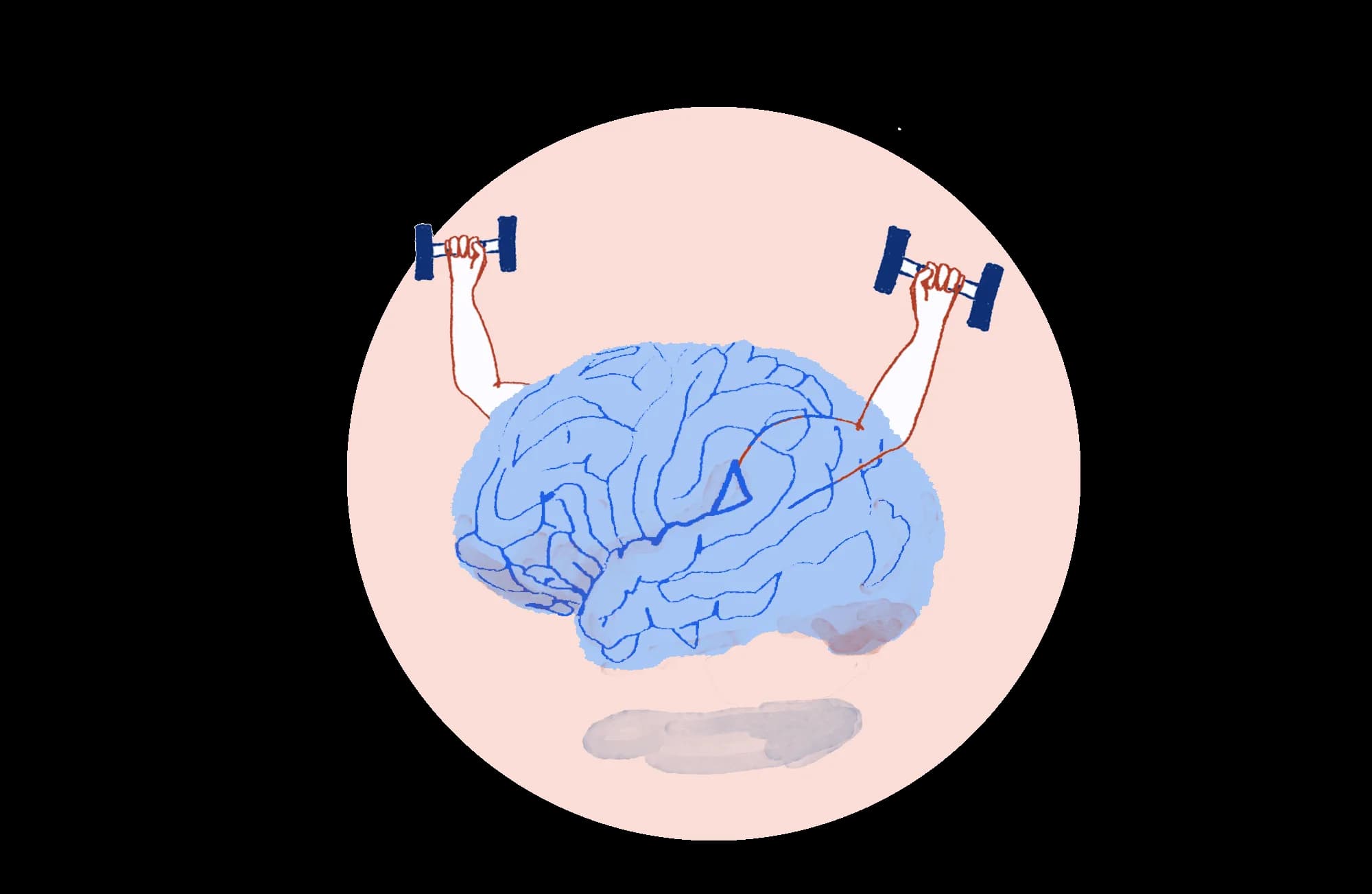
Ask most pupils to complete a quiz on a topic they have not yet been taught, and their immediate reaction is discomfort. In traditional educational settings, answering incorrectly feels like a failure.
Because of this deeply ingrained perception, teachers naturally hesitate to set quizzes before introducing a topic. It feels counterintuitive to test pupils on material they have not yet encountered.
Even more powerful is what psychologists term the hypercorrection effect. When a pupil makes an error with high confidence, believing unequivocally that they knew the correct answer, receiving immediate correction generates a momentary jolt of curiosity. That emotional surprise lodges the correct concept far deeper into long-term schema than if they had simply received the fact passively.
For secondary practitioners across Science, Mathematics, English, Humanities, and Languages, leveraging pre-testing and hypercorrection transforms how pupils learn, converting errors from sources of anxiety into potent engines for durable retention.
Neuroscience insights
Why guessing helps you learn
Why does taking a test on unfamiliar material boost retention?
When a pupil attempts a pre-test question, their brain actively searches its existing neural network for related concepts, vocabulary, or logical clues. This process of active retrieval, even when unsuccessful, primes the brain to receive incoming information.
When the correct explanation is delivered immediately after an incorrect guess, the brain experiences a heightened state of alertness. The disparity between expectation and outcome triggers a dopamine response, priming working memory to encode the correct answer permanently.
By contrast, when information is presented passively first (such as listening to a twenty-minute teacher explanation before attempting a task), pupils operate in a low-curiosity state, leading to rapid memory decay.
| Strategy | Pupil Cognitive State | Information Processing | Long-Term Retention Outcome |
|---|---|---|---|
| Passive Instruction First | Low curiosity, passive listening | Superficial encoding in working memory | Rapid memory decay within 48 hours |
| Pre-Testing & Hypercorrection | High alertness, curiosity gap activated | Deep cognitive encoding via immediate correction | Durable long-term schema integration |
Making a high-confidence mistake is not a failure. It is the precise moment the brain becomes most fertile for learning. Surprise is the ultimate cognitive glue.
Teaching strategies
How teachers can use pre-testing in the classroom
Teachers can deploy the principles of pre-testing and hypercorrection across Key Stage 3 and GCSEs without increasing planning or marking time:
- Frame Pre-Testing as Low-Stakes Discovery Ensure pupils understand that pre-testing is not an assessment of ability, but a memory-priming exercise. Removing grade anxiety encourages pupils to make educated guesses rather than skipping unfamiliar prompts.
- Provide Immediate, Step-by-Step Feedback Hypercorrection depends entirely on immediate correction. If a pupil receives feedback on a pre-test three days later, the curiosity gap has closed, and the memory boost is lost. Explanations must be delivered instantly while the cognitive prompt remains active.
- Normalise the "Confidently Wrong" Moment Teach pupils to celebrate moments when they felt certain of an answer but turned out to be incorrect. Normalising errors shifts classroom culture from passive compliance to active, curious inquiry.
Tassomai in action
How Tassomai automates pre-testing and hypercorrection
At Tassomai, pre-testing and hypercorrection are hardcoded into our adaptive learning engine, providing schools with a zero-prep tool that puts cognitive science into action across Key Stage 2, Key Stage 3, and GCSEs.
Continuous Adaptive Pre-Testing: Tassomai introduces new syllabus topics through low-stakes micro-quizzing before formal classroom instruction. This primes pupil memory so that when teachers introduce the topic in class, pupils process the material far deeper.
Instant Explanations via Mai: The moment a pupil makes an error on Tassomai, our AI tutor, Mai, provides immediate, step-by-step guidance. Capturing the pupil at the exact moment of error maximises the hypercorrection effect.
Spaced Re-Testing for Permanent Retention: Once a misconception is corrected, Tassomai's algorithm automatically re-introduces the question at scientifically calculated intervals to ensure the corrected concept is securely lodged in long-term memory.
Multi-Subject Efficiency: From complex Science equations and Mathematics operations to English Literature quotations and Humanities vocabulary, Tassomai applies hypercorrection across the entire curriculum automatically.
By turning low-stakes pre-testing into a smooth daily habit, Tassomai helps teachers build resilient, curious learners who view errors as stepping stones to academic mastery.
Instant Explanations via Mai: The moment a pupil makes an error on Tassomai, our AI tutor, Mai, provides immediate, step-by-step guidance. Capturing the pupil at the exact moment of error maximises the hypercorrection effect.
Frequently asked questions
No. Research in cognitive psychology demonstrates that as long as pre-testing is immediately followed by clear, accurate feedback, pupils do not retain the error. In fact, they remember the corrected answer significantly better than if they had never been pre-tested at all.
Lower-attaining pupils often suffer from learned helplessness when confronted with long, traditional assessments. Short, low-stakes pre-test questions on Tassomai provide immediate, non-judgmental feedback, helping SEND and lower-attaining pupils experience immediate correction without emotional stress.
Teachers can check their Tassomai dashboard before starting a new unit to see pre-test accuracy data across the class. This reveals existing pupil knowledge and common misconceptions instantly, allowing teachers to tailor their lesson plan with zero prep time.
Tagged: Retrieval practice, Science of learning, Tassomai