
The testing effect in practice: Why retrieving knowledge beats re-reading notes every time

If you walk into a school library or observe a pupil at their desk during revision season, you will see a familiar scene: textbooks propped open, key terms highlighted in fluorescent yellow, neat summaries transcribed into notebooks, and class exercise books read and re-read.
This style of revision feels comfortable, satisfying, and productive. When a pupil re-reads a passage on photosynthesis or quadratic equations three times in succession, the material begins to feel intimately familiar. That familiarity creates a dangerous psychological trap known as the illusion of competence. The pupil feels as though they have mastered the concept, when in truth they have merely developed passive recognition. Highlighting creates the same illusion, which is why it pays to swap the highlighter for active recall.
Key points
Key takeaways
Passive re-reading creates an illusion of competence, and pupils remember less of what they re-read than of what they practise recalling.
The testing effect shows that retrieving knowledge actively strengthens memory more effectively than passive re-reading.
Pupils resist active retrieval because it requires effort, fear of errors, and lack of accessible practice materials.
Tassomai applies the testing effect through automated daily retrieval quizzes with algorithmic spacing and instant AI guidance.
Low-stakes frequent testing reduces examination stress and promotes durable long-term learning.
The testing effect
Why retrieving knowledge beats re-reading notes every time
Researchers have studied the benefits of recall practice for more than a century, and a major review of study techniques by Dunlosky and colleagues (2013) rated re-reading as a low-utility technique. If we want pupils to retain information securely for GCSEs and Key Stage 3 assessments, we must shift them from passive input to active output. This is the testing effect: students who practise recalling a text remember more of it a week later than students who spend the same time re-reading it (Roediger and Karpicke, 2006).
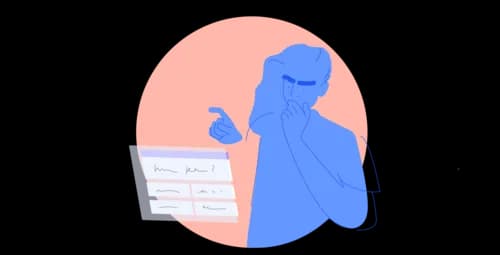
Why does retrieving information outperform re-reading it?
When a pupil reads a textbook chapter, the brain processes information passively with minimal cognitive exertion.
When a pupil is required to answer a prompt without consulting their notes, the brain must perform a deliberate cognitive search. That effort to recall a fact makes it easier to recall next time.
| Revision Method | Cognitive Mechanism | Pupil Experience | Long-Term Retention Outcome |
|---|---|---|---|
| Passive Re-Reading | Recognition of familiar text without mental effort | High comfort, false sense of mastery | Weaker recall a week later |
| Active Retrieval Practice | Recalling information from memory without notes | High cognitive effort, productive struggle | Stronger recall a week later |
The testing effect demonstrates that assessment is not merely a tool for measuring learning after it has occurred. The test is a learning event in its own right. Every time a pupil successfully retrieves a fact, formula or quotation, they are more likely to remember it later. Mixing topics within a practice session, known as interleaving, adds a further boost.
Student challenges
Why students resist active retrieval and how to help them
Despite overwhelming scientific evidence supporting the testing effect, pupils naturally default to passive re-reading. Understanding their resistance enables teachers and parents to guide them toward superior study habits:
Active Recall Requires Genuine Effort Retrieving information demands real mental exertion. When a pupil struggles to recall a formula, they interpret that struggle as failure. Re-reading a textbook feels smooth and easy, conferring a false sense of achievement. We must teach pupils that this effort is often a sign that learning is happening.
Fear of Answering Incorrectly Traditional academic settings frequently associate tests with high stakes and formal grading. Pupils avoid self-testing at home because making errors feels uncomfortable. Reframing retrieval as low-stakes practice dismantles this emotional barrier.
Lack of Accessible Practice Materials Formulating flashcards or sourcing practice prompts manually requires significant time and energy. When confronted with high friction, teenagers choose the path of least resistance: opening a notebook and reading passively.
Using Tassomai
How Tassomai puts the testing effect into daily practice
At Tassomai, the testing effect forms the core foundation of our platform architecture, providing schools and families with an automated system for daily retrieval practice across Key Stage 2, Key Stage 3, and GCSEs.
Continuous Low-Stakes Quizzing: Tassomai replaces passive reading with short, active retrieval quizzes across Science, Mathematics, English Literature, English Language, History, Geography, Computer Science, and MFL. Pupils actively retrieve knowledge every single day.
Algorithmic Spacing and Interleaving: The platform tracks individual accuracy and response speeds, re-introducing concepts precisely as they begin to fade from memory. This maximises the cognitive effort required for recall, cementing long-term retention.
Instant Guidance via Mai: When a pupil struggles during retrieval, our built-in AI tutor, Mai, provides immediate, step-by-step explanations, converting a retrieval attempt directly into an instructional moment.
No quizzes to write or mark: Teachers get the benefits of the testing effect without spending hours writing, printing or marking retrieval quizzes. Tassomai sets and marks the quizzes and feeds diagnostic data to department dashboards.
By building the testing effect into a short Daily Goal of about 10 to 15 minutes per subject, Tassomai helps pupils swap the illusion of competence for real, lasting knowledge.
Frequently asked questions
Not when testing is low stakes. High stress arises from rare, high-stakes examinations associated with formal grades. When retrieval practice is frequent, brief, and ungraded, testing becomes a routine habit that desensitises pupils to examination pressure.
Educate pupils directly on the illusion of competence. Demonstrate how re-reading creates false familiarity, and establish clear expectations around active daily retrieval micro-goals rather than hours spent summarising notes.
Yes. While essay subjects such as English Literature, History, and Geography demand high-level analytical argument, that analysis depends on fluent recall of core vocabulary, dates, historical context, and textual quotations. Securing these foundations through retrieval practice liberates working memory for high-level synthesis and essay writing.
Tagged: Retrieval practice, Revision, Tassomai