
GCSE maths - what you need to know as a parent
Tassomai
6 min read
Our GCSE Survival Guide maths expert says that for GCSE maths, it’s essential that students get to grips with the basic core topics first and then build up from there.

- Wendy Finan, Senior Secondary Mathematics Teaching and Learning Consultant
The key thing to getting the most out of GCSE maths is laying strong foundations. These are the guiding principles that will see a student through and help them to understand the more challenging topics. The basic core topics would include number properties and calculation, ratio, fractions, decimals, percentages, and using negative numbers. If your child doesn’t have a solid understanding of these ideas, then piling on the harder topics is simply not going to work.
Crunch times
Technically, GCSEs only last for 2 years but a lot of schools are adjusting this so that the courses span nearly 3 or even 5 years. In my opinion, maths is a continuum and GCSEs really start in year 7 and earlier when teachers are laying the foundations, so it’s never as clear cut as starting them fresh in year 9 or 10. There should not be any big flash points in the GCSE timeline or crunch times they should be preparing themselves for. The key to doing well in mocks and exams alike is consistency. Flaring up their stress and attention levels around exam periods is only going to put undue pressure on their mental health, which is the last thing they need. By remaining consistent and being strong in the basics, they are much more likely to succeed both academically and emotionally.
Students should be aware that Maths is a service subject, and a requirement for many optional subjects at GCSE and A level; students should research their option choices as early as possible to avoid disappointment.
Tricky topics
Algebraic skills will usually be taught from year 7 onwards, and making sure your child is confident with these will help to set them up for their GCSE years, as a lot of topics spring from this foundation. It’s useful to recognise that the rules of algebra, factorising and the order of operations is just the same as students have already mastered in their earlier years. Mastering algebraic manipulation is essential to understanding simple equations and more challenging topics which escalate from there. Many schools will follow a spiral curriculum and revisit these topics regularly, but if we can master the idea of recall and retention then revisiting will not mean reteaching and the spiral curriculum will enable skills to grow and develop further each visit.
Trigonometry is another topic that usually pops up in year 9. Although some schools opt to introduce it earlier, students must have a clear grasp of ratio and proportion as well as algebraic manipulation to really be able to understand this topic, so I would be wary of introducing it too early. From the higher tier specifications, even the most able students can find vectors difficult. The basics of this topic are OK but then throw in fractions, algebra and geometry and it gets a bit more complex. I would advise moving through this topic with baby steps.
Foundation or higher?
Parents often worry about what entry tier (foundation or higher) their children are sitting and assume that if they aren’t sitting the higher paper then they’ve already failed. This really isn’t the case, in 2019 almost 60% of UK students were being entered at foundation level. Government advice is that students expected to get a grade 4 or 5 should sit the foundation tier. Lots of students do very well at this level, and have a better experience than facing an exam paper which is mostly inaccessible. Progression routes for higher and further education should be investigated but unless a student is wanting to progress to maths, science or engineering qualifications a grade 4/5 is usually sufficient.
Positive attitude
Learning should be fun! Maths is largely about the mental attitude you have towards it. It is too easy to give off the impression that it’s ok to be bad at maths; as a maths teacher I regularly hear parents telling me how they were never good at maths, but I think we should try to avoid students adopting this mindset. It's really important that parents reinforce the idea of keeping going rather than giving up and encourage a can-do attitude. They need to build resilience in their work and be able to carry on when they’re finding something tricky. Working hard will always lead to progress, it’s not always about getting the top grades.
Maths doesn’t have to be tedious
Try breaking up revision with strategy games, puzzles and problem solving like Sudokus. It shouldn’t have to feel like your child is slogging through their work all of the time and it can be a great thing for you to do with them as a way of keeping them mathematically engaged. The new national curriculum has a huge emphasis on problem solving, meaning students need to understand how to apply maths like Pythagoras’ theorem, rather than just grasping it as a concept.
One of the best ways parents can engage with their child’s maths work is to ask them to explain what they are doing, either homework or in lessons. There is a growing emphasis on reasoning in maths and if they’re able to articulate why they have chosen a certain method and why it has or hasn’t worked, they will be better equipped to pick up these marks. In some universities, when interviews for maths take place they look for candidates who can explain what they are doing while they are working out a question - this is a skill that will make them stand out from the crowd. Improving any kind of communication skills they have is only ever going to benefit them in the long run, as being able to share your ideas and fully explain them is essential for working in a team.
What kind of parent are you?
Parents have a tricky balancing act to perform, being over-involved or not involved enough with their child’s schoolwork can both have a negative impact on outcomes. Over involvement can lead to additional pressure for students and sometimes unrealistic expectations, under involvement can lead to students switching off and not performing as well as they could. As a parent you would aim for that goldilocks position where parents are encouraging, interested and supportive.
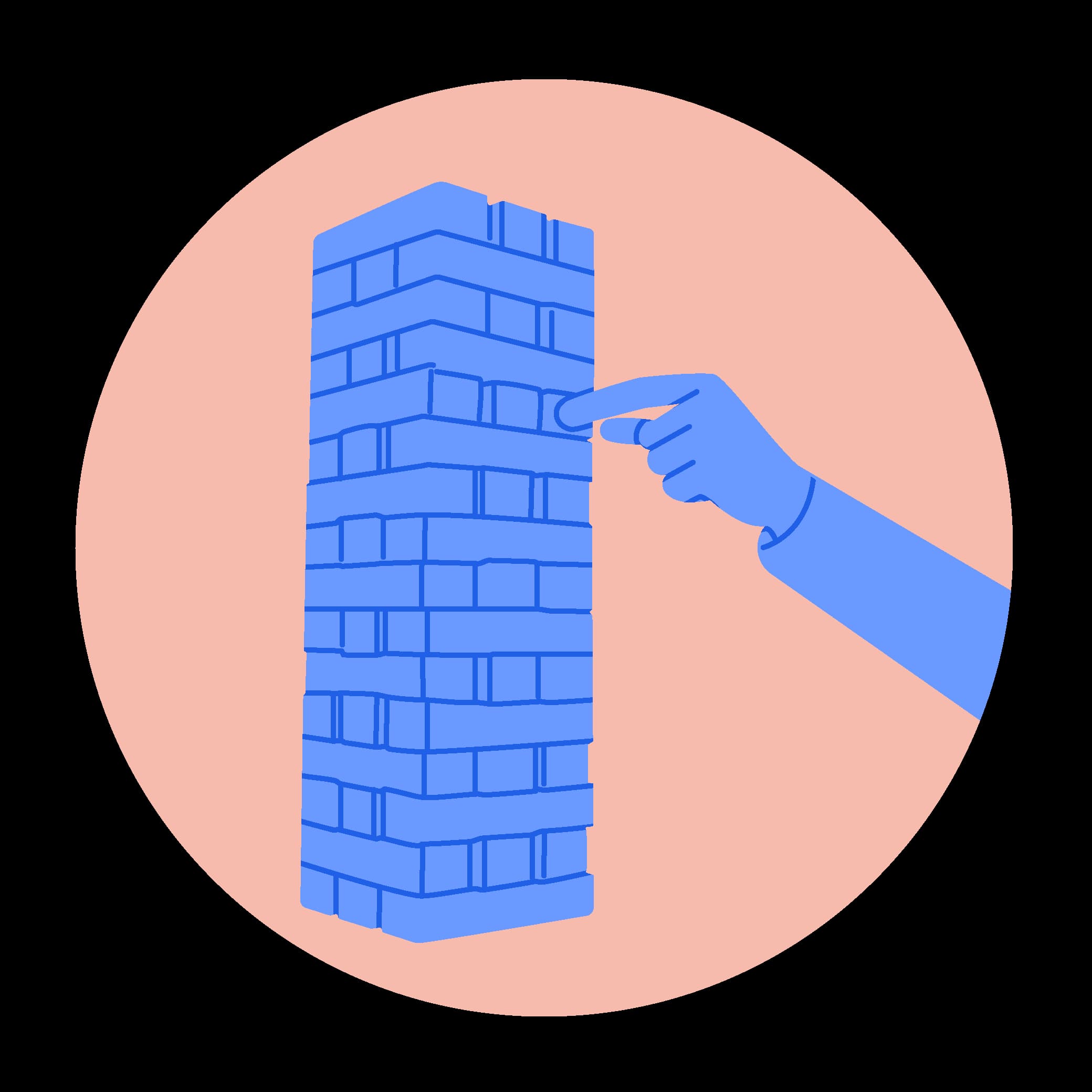
Where a student is accelerated too quickly, the results could be disastrous. Just like a Jenga tower, maths needs a solid foundation, otherwise everything laid on top will come crumbling down. This has been recognised in the maths curriculum over the last few years and teachers are now being encouraged to reinforce the basics as much as possible and not push too far too quickly. If you are able and choose to get a tutor for some extra maths help, make sure they know the pace you’re after as trying to master the harder topics before they have a solid foundation can knock a student’s confidence considerably.
I would encourage all parents to keep communication channels open between school, student, and parent. Talk to each other, particularly if you as a parent have any concerns. Hopefully your child is having a great experience at school and your role as a parent will be an easy one as long as you’re listening to and engaging with your child to help them get the best outcome for them. I’m sure you’re going great!
- Wendy Finan
Read more articles from our GCSE Survival Guide series
View all Survival Guide articles
2 January 2025 · Article, Tips for parents, Tips for students, Tips for users
Exams this year? Here’s how to make the most of the next few months (and how Tassomai can help!)
2025 is just beginning but exam season will come around quickly! Here’s what parents can expect over the next 6 months, and how they can help students prepare for exams.
1 December 2022 · Tips for students
Tassomai’s New GCSE Survival Guide for Students!
As students look towards the new year, with the return of strict grade boundaries and exams looming on the horizon, Tassomai has published a free guide for students to help them navigate the challenging GCSE years.

26 September 2022 · Tips for parents, Tips for teachers, News
New GCSE Survival Guide - Practical Advice for Parents of Y9-11s
As a new cohort of students embark upon their GCSE journey and others begin to think about their mocks, Tassomai has published an updated (free) guide for parents to help them navigate what can be a challenging time for families.

3 February 2022 · Tips for parents
5 ways to support your child’s mental health throughout their GCSEs
As we look towards end of year assessments, Tassomai asks mental health and education experts what their top pieces of advice are for parents supporting their children’s wellbeing.

2 December 2021 · Tips for parents
A Step-By-Step Guide to Revising for GCSEs
Matt Green, The Rapping Science Teacher on tiktok and the owner of JGM Science Tutors, speaks to Tassomai about his foolproof method for getting revision started (unfortunately, it’s not rapping).

23 November 2021 · Tips for parents, Tips for teachers
Top tips for parents from a senior leader
Karen Collins, Lead Science Associate for PiXL, speaks to Tassomai about the structure of the science GCSEs and how parents can best prepare themselves and their children for science assessments.

11 November 2021 · Tips for parents
Spotting the signs of exam stress in GCSE students
Are they burying their head in the sand like the ostrich or are they more like the laid-back lion? Tassomai founder Murray Morrison presents a few classic archetypes of exam-stressed children !

4 November 2021 · Tips for parents
A Parents’ Guide to GCSE Revision
Abi Ludlow, English teacher and KS3 Lead at Richard Lander School tells parents exactly what they need to know about their child’s revision schedule , and where they fit in!
Tagged: GCSE Survival Guide, Core-subject advice, Maths, GCSE maths, Wendy Finan, Maths subject page, Maths campaign page