
Building resilience in your students - advice for teachers
Tassomai
6 min read

Sam Clark, teacher, writer and founder of the Resilience for Kids website gives us his best advice for teachers on building resilience and supporting students’ wellbeing.
I used to think that some people were just born to handle life’s challenges better than others.
As a child, I wondered why my friend Daniel was able to smile when his team lost, while my other friend James stomped across the playground shaking, sulking and shouting all kinds of things a 9-year-old shouldn’t.
This mystery continued when I became an adult. On starting my teaching career, I realised that some children could talk openly about their challenges while others exploded at the first hint of failure.
Back then, I simply didn’t have the time to teach resilience along with the reading, maths and writing skills that perch on top of the priority table. And anyway, even if I did have time, thoughts like “it’s the parent’s job” and questions like “Am I qualified to explore this area?” popped up and pushed my focus elsewhere.
However, resilience didn’t go away. The longer I worked with children, the more I realised that resilience formed the absolute crux of positive learning behaviour. Children need to feel calm, confident and curious to learn effectively, and a resilient mindset can be the foundation for all of these traits.
With this in mind, it was time to explore. I consulted with experts, taught in a range of schools and listened to children in a bid to work out whether resilience could actually be built. Within three weeks I had my answer. Yes, yes and yes- resilience could absolutely be built, which meant that it could be taught. For a teacher this revelation was very exciting. A shiny, sparkling new subject to plan and deliver!
What I thought would be a six-month exploration turned into a three-year battle, but from those bruises came some insights, which I would like to share with you now.
THE JOURNEY BEGINS
The first task was to break resilience down into manageable chunks. It took us a while. I mean, what skills/tools do you need in order to be resilient?
It didn’t come to us immediately so we flipped the question and started thinking about those who lack resilience? This made it easier. We concluded that in a lot of cases, a lack of resilience stems from the inability to self-regulate so we started on the identification of emotions.
This is where we came across our first surprise. Very few children could identify a wide range of emotions. Happy? Yes. Sad? Yes. But very little in between.
We encouraged children to develop a broad range of emotional vocabulary through activities, stories and classroom displays (see below).
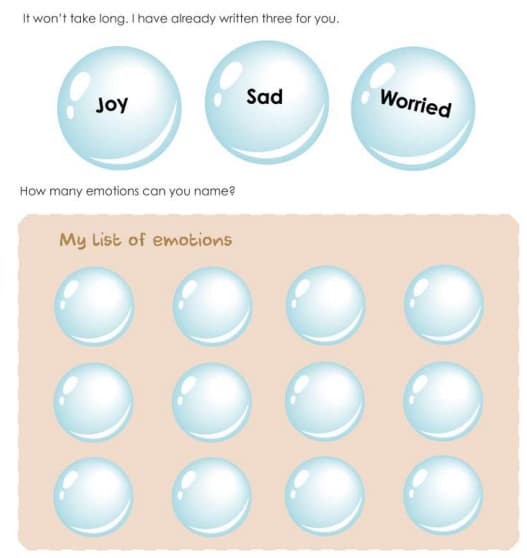
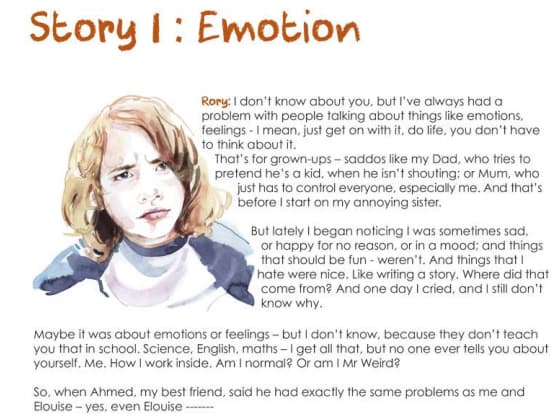
This new repertoire of emotions gave children the vocabulary to communicate effectively about their lives. They began to explain how they felt and started to speak openly about their fears, worries and hopes. This ability to talk - which we cultivated through encouragement, representations and teacher modelling - made self-reflection a cool and relevant journey that the children valued.
“ONE THING TO KNOW ‘EM ANOTHER THING TO MANAGE THEM”
Now the children could identify emotions, the next step was to discuss the management of them. This was a challenge - there are so many emotions, so many triggers, such a range of previous experience in your average classroom. Explaining that emotions were like messengers helped the majority and after a few near misses, we found gold with the simplest of diagrams:
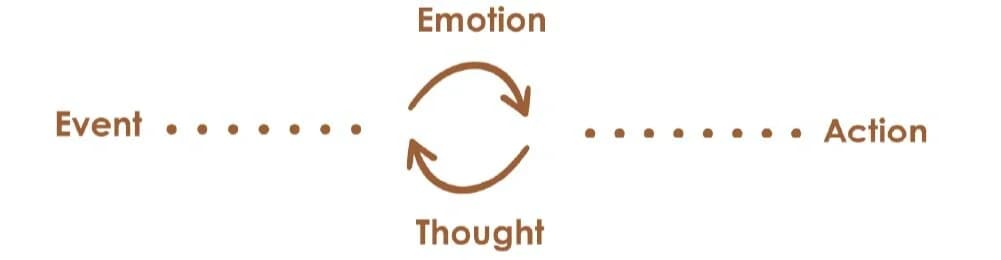
This image paved the way for children to realise that creating space before acting gave them a much greater chance of dealing with life events positively. It also helped them to recognise that they were responsible for their actions. Excuses were replaced by honest self-evaluation and a culture of ‘pausing before acting’ spread across the school community. Children were starting to build resilience- they were ready for the Tornado Zone.
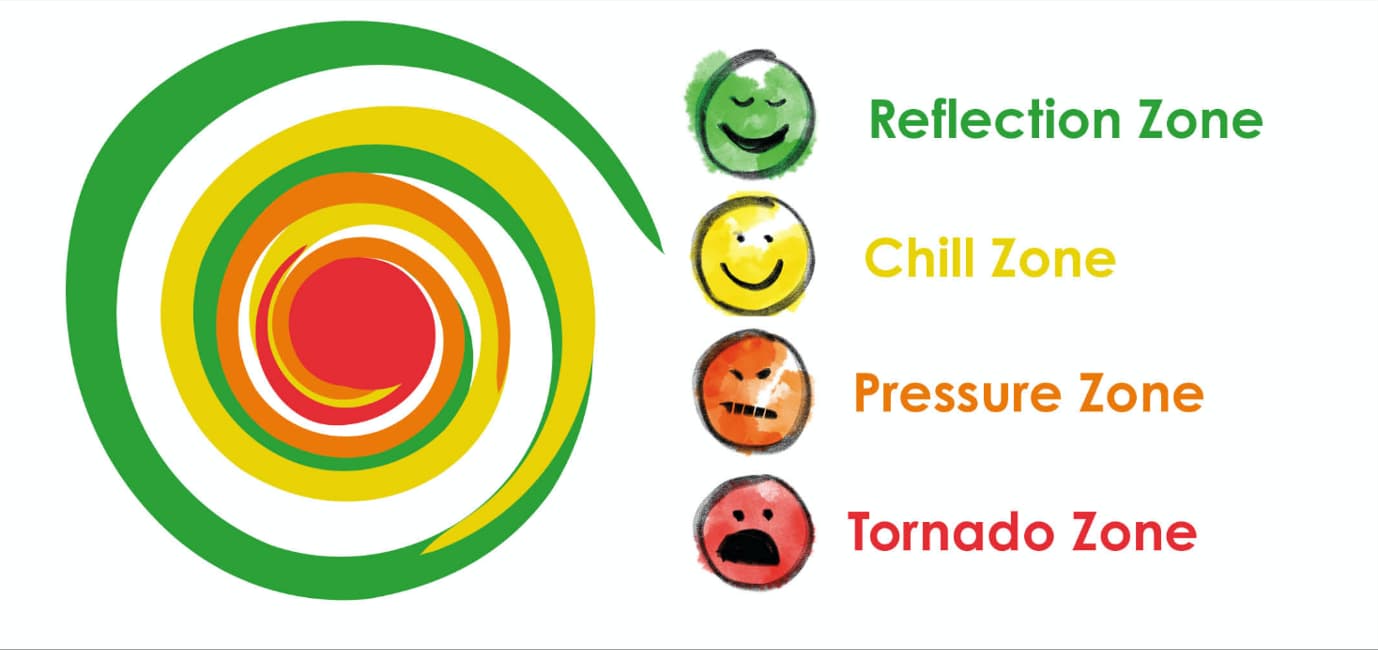
This image formed the foundation of our teaching of anger management. Children liked the colours, the concept and adopted the language immediately. We then asked the children to identify their own personal triggers before providing practical strategies to avoid actions in the Tornado Zone.
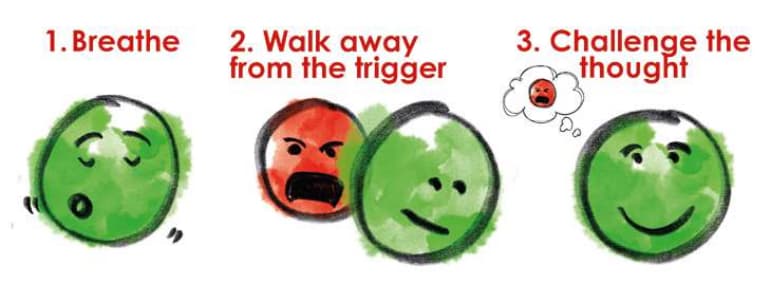
This advice was not perfectly applied (I don’t think it will ever be!) but when mistakes were made, the steps provided the perfect platform to examine incidents. A shared language developed across the school community, which was used by adults and children. This led to significantly improved follow-up conversations.
For example:
Adult: What was the trigger that made you fall into the Tornado Zone?
Child A: Um…ah… being left out, Miss.
Adult: What are the steps when we fall into the Tornado Zone?
Child A: Breathe, walk away from the trigger and challenge the thought... Oops. I should have remembered. Sorry, Miss.
Of course, behaviour is not going to improve after one follow-up conversation but it didn’t take long for a transformation to happen across the school - deep breaths and walking away replaced anger and unkindness.
Once self-regulation had been embedded, we pinpointed and addressed what we titled the greatest opportunities for resilience.
THE THREE GREAT OPPORTUNITIES
The first was failure- the importance of embracing failure and how to climb out of the Pit of Failure. This representation opened lots of minds.
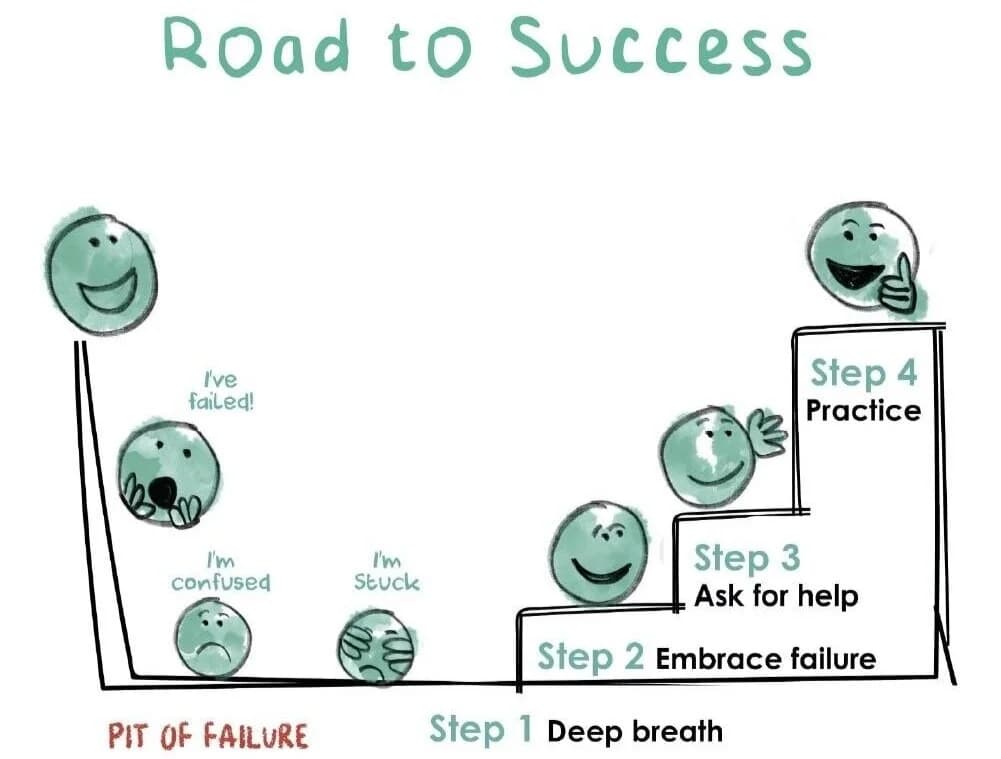
There are few reactions more satisfying than seeing a child realise that failure is actually not the end of the world. You can see an almost immediate shift in children’s actions (and body language) when they realise that failure is often the first step to success. They become more confident, more curious, more resilient.
After failure came taking responsibility - the benefits and how to manage those pesky Escape Thoughts that get triggered in all of us.
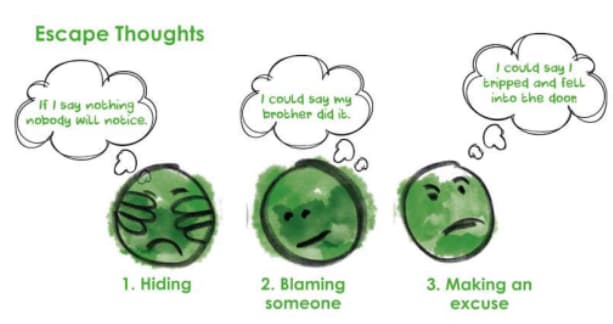
The key discovery for children in this strand was the recognition that if they don’t hide from mistakes then they have a much greater chance of learning from them. This focused many minds. The embedding of this skill saved so much time. Children’s honesty meant that very few incident investigations needed to be carried out. Teachers could have their lunch!
The final area was other people- how to manage their Tornado Zones, expectations and how to set friendship boundaries.
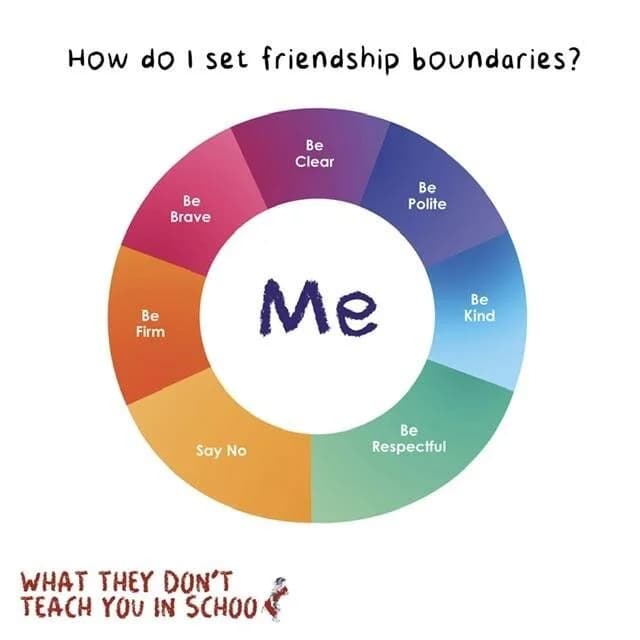
The mere realisation that other people – including friends – can be tricky was an important step for many children. As was providing the skills to have difficult conversations but the application of personal needs through the setting of effective relationship boundaries was something that all of the children appreciated.
We have seen enormous social and emotional progress from our children but we recognise that we have only just started on this wellbeing journey. I hope you can see the benefits, and hope some of the ideas in this piece can drive wellbeing in your school communities.
- Sam Clark (@open_youngminds on Twitter)
You can read more about resilience in What They Don’t Teach You in School – a workbook designed to help build the resilience of children.
Read more articles from our GCSE Survival Guide series
View all GCSE Survival Guide articles
2 January 2025 · Article, Tips for parents, Tips for students, Tips for users
Exams this year? Here’s how to make the most of the next few months (and how Tassomai can help!)
2025 is just beginning but exam season will come around quickly! Here’s what parents can expect over the next 6 months, and how they can help students prepare for exams.
1 December 2022 · Tips for students
Tassomai’s New GCSE Survival Guide for Students!
As students look towards the new year, with the return of strict grade boundaries and exams looming on the horizon, Tassomai has published a free guide for students to help them navigate the challenging GCSE years.
26 September 2022 · Tips for parents, Tips for teachers, News
New GCSE Survival Guide - Practical Advice for Parents of Y9-11s
As a new cohort of students embark upon their GCSE journey and others begin to think about their mocks, Tassomai has published an updated (free) guide for parents to help them navigate what can be a challenging time for families.
3 February 2022 · Tips for parents
5 ways to support your child’s mental health throughout their GCSEs
As we look towards end of year assessments, Tassomai asks mental health and education experts what their top pieces of advice are for parents supporting their children’s wellbeing.

2 December 2021 · Tips for parents
A Step-By-Step Guide to Revising for GCSEs
Matt Green, The Rapping Science Teacher on tiktok and the owner of JGM Science Tutors, speaks to Tassomai about his foolproof method for getting revision started (unfortunately, it’s not rapping).

23 November 2021 · Tips for parents, Tips for teachers
Top tips for parents from a senior leader
Karen Collins, Lead Science Associate for PiXL, speaks to Tassomai about the structure of the science GCSEs and how parents can best prepare themselves and their children for science assessments.

11 November 2021 · Tips for parents
Spotting the signs of exam stress in GCSE students
Are they burying their head in the sand like the ostrich or are they more like the laid-back lion? Tassomai founder Murray Morrison presents a few classic archetypes of exam-stressed children !

4 November 2021 · Tips for parents
A Parents’ Guide to GCSE Revision
Abi Ludlow, English teacher and KS3 Lead at Richard Lander School tells parents exactly what they need to know about their child’s revision schedule , and where they fit in!
Tagged: GCSE Survival Guide, Mental Health, Resilience, Sam Clark