
Less paperwork, more learning
Tassomai
3 min read
How Tassomai helped us cut down on marking and spend more time on teaching
By Laura Foulsham, Head of Science at St. John Bosco College
At St John Bosco College we have been using Tassomai for 3 years now and its impact on outcomes has been obvious. Our double and triple science students in year 11 have achieved their highest ever Progress 8 scores. We have, as a science department, embedded a culture where students are consistently reminded about Tassomai, daily goals and progress percentage. The buy-in for Tassomai from all members of the department is evident with teachers showing their competitive streak in the staff room at breaks and lunch. We also believe another reason staff have bought into it so well is because it helps manage and streamline their work.
A Tassomai-centred approach to homework
The school’s homework policy is focused around revision and Tassomai is a particularly useful tool which helps us manage and implement this. Teachers in the Science Department set Tassomai as the primary homework activity for all key stage 4 students. Each week we come up with new Tassomai related challenges to ensure students are not becoming tired of the same routine. Some examples of the homework set include:
Gaining 2% overall progress during the week
Spending 2.5 hours on Tassomai in the last 7 days
Completing 100% of the questions on “infection and response”
Getting all blue and green (high accuracy) in “Atomic Structure and The Periodic Table”.
Each week's homework has been target-specific, changing depending on whether the goal is general revision or targeted questions to prepare for an end of unit test. This system of using Tassomai for homework has really helped us with managing teacher workload. We’ve found it’s quick and easy to set homework, simple to monitor and it has also embedded a great culture of independent learning for students.
Saving time on marking (and saving paper too)
Due to Tassomai being self-marking, teachers are no longer required to “tick and flick” homework. Previously, homework required paper and worksheets; now the department uses less paper so we’re saving on printing. In addition, teachers can use the Tassomai dashboard to easily check that homework has been completed; students also feel that homework is being checked and something is being done about it.
We at SJBC are all big Tassomai fans. We’ve been using it for 3 years now and not only has it improved our results but helped managed teacher workload and support student learning.
The reduction in marking has been notable, however this has not been the aspect teachers have commented on as the most useful and time-saving feature of Tassomai. Setting targets and monitoring student attainment has allowed teachers to make quick wins when it comes to rapid intervention. With just a quick glance, teachers can find students with high levels of red or low accuracy and pull them in for additional support, without going through the usual process of diagnosis and testing.
Rapid intervention allows students to make quick progress, resulting in marginal gains. This has prevented us from having to "put out fires" in year 11, as students are now continuously revising and being provided with targeted support throughout the GCSE course. This has had a massive impact on overall teacher workload and stress levels. As a year 10 teacher, Tassomai makes it easy to highlight areas of weakness for the whole class as well as for individual students, helping us to run intervention programs. These interventions are now more highly targeted, as we can look at their understanding on Tassomai, meaning we waste less time.
A more motivational and a more manageable workload
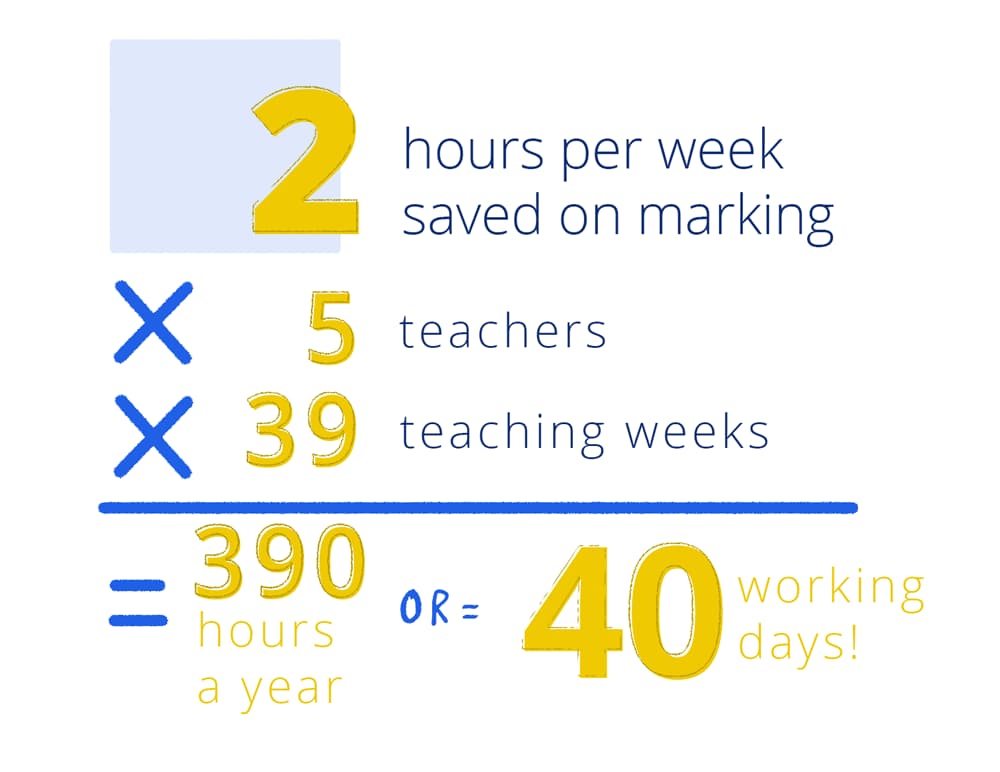
As a department we believe that the main benefit of Tassomai is that it reduces the amount of wasted time for both students and teachers. This time saved allows for quicker marginal gains, taking the pressure of planning intervention off teachers - it is now easy to see what students are unsure of, and focus only on that. Tassomai essentially allows us to have more learning time, both inside and outside of lessons, and it results in fewer admin and paperwork tasks. This system is not only providing a more manageable workload, it's also proving motivational for both students and teachers - the more progress is made the more the students use Tassomai.
All case studies
View all case studies
9 January 2026 · Case study, Tips for teachers
How whole-school culture and multi-subject strategy drove outstanding Tassomai engagement
How Sir Thomas Wharton Academy embedded Tassomai across subjects to build strong routines and exceptional engagement.

9 January 2026 · Case study, Tips for teachers
How creative rewards — from Tassimals to queue-jump passes — transformed student motivation at STWA.

28 March 2025 · Case study, Tips for teachers
“Great bang for your buck” - A headteacher’s verdict on Tassomai and its impact
Dr Paul Bell tells us how Horsforth School has embraced Tassomai to improve student engagement, reduce teacher workload, and drive better results.

5 November 2024 · Case study, Tips for teachers
How Class Tasks make homework less work
Holly Bradshaw , Curriculum Leader for Science at Marple Hall School , spoke to us about how Class Tasks are helping with homework setting and boosting students’ confidence.

26 June 2024 · Case study, Tips for teachers
The Tassomai impact on Humanities
Clare Quarton, Teaching Team Leader for Humanities at Treviglas Academy, Newquay tells us about the impact Tassomai has had and how they’ve made homework fun, engaging and a little bit competitive for students.

26 June 2024 · Case study, Tips for teachers
Setting students on a path to top grades in GCSE geography with Tassomai
Geography is a very content-heavy subject, so it can be tough for teachers to cover the syllabus more than once. Using Tassomai to revise and recap has really helped helped her students, says Charlotte Pollard, a Geography ECT at Treviglas Academy in Newquay .

24 April 2024 · Case study, Tips for teachers
Using Tassomai’s maths content to build good learning habits at key stage 3
Kyle Parsad talks about his experience of using Tassomai’s maths content to build good learning habits among his KS3 students, and about its positive impact on teacher workload.

27 March 2024 · Case study, Tips for teachers
Using Tassomai to help teach GCSE history
A history teacher at Chase High School in Southend-on-Sea shares his experience of using the edtech retrieval practice program "Tassomai" to help embed knowledge with his GCSE history students.
Tagged: Homework, Teaching, User stories