
What are GCSE mock exams and how do you revise for them?
Tassomai
Published
Updated
5 min read
Mock exams, or mocks, are practice GCSE exams that your school runs before the real ones. You sit exam-style papers in exam conditions, and your teachers mark them to show you where you are and what to work on before the summer.
Many year 11s sit their mocks this winter, so here’s what to expect and how to get ready.
What are mock exams?
Mocks are a practice run of your GCSEs. You usually sit past papers, or papers like them, with the same timings and rules as the real exams. Ofqual, the exams regulator, asks schools to make sure students sit mock exams in exam conditions before their real exams [1].
Some subjects, such as maths, the sciences and modern foreign languages, have two tiers. Foundation tier covers grades 1 to 5 and higher tier covers grades 4 to 9, and your school decides which tier to enter you for [2].
When are GCSE mocks?
There’s no national date for mocks, because each school sets its own. Many schools hold year 11 mocks in December or January, some run them in November or February and some hold a second set in the spring. Your teachers will tell you your dates.
The real GCSE exams take place in May and June [2], so a winter mock leaves you a few months to act on what it shows you.
Do mocks matter?
Mock grades don’t count towards your final GCSE results, but mocks still matter. Schools often use them to:
set predicted grades, which sixth forms and colleges often ask for when you apply
decide whether you sit the foundation or higher tier in tiered subjects
spot the topics your class needs to go over again
keep evidence of your work in case the real exams ever couldn’t go ahead, which Ofqual says is very unlikely [2]
Mocks are also your best practice at the exam itself: timing, reading questions carefully and coping with nerves. A disappointing mock isn’t a final result. It’s a list of things to fix while there’s still time.
How to revise for mocks
Start a few weeks before your mocks and keep it steady. If they’re only days away, our guide to revising one week before exams will help you use the time you have.
Find your weak topics
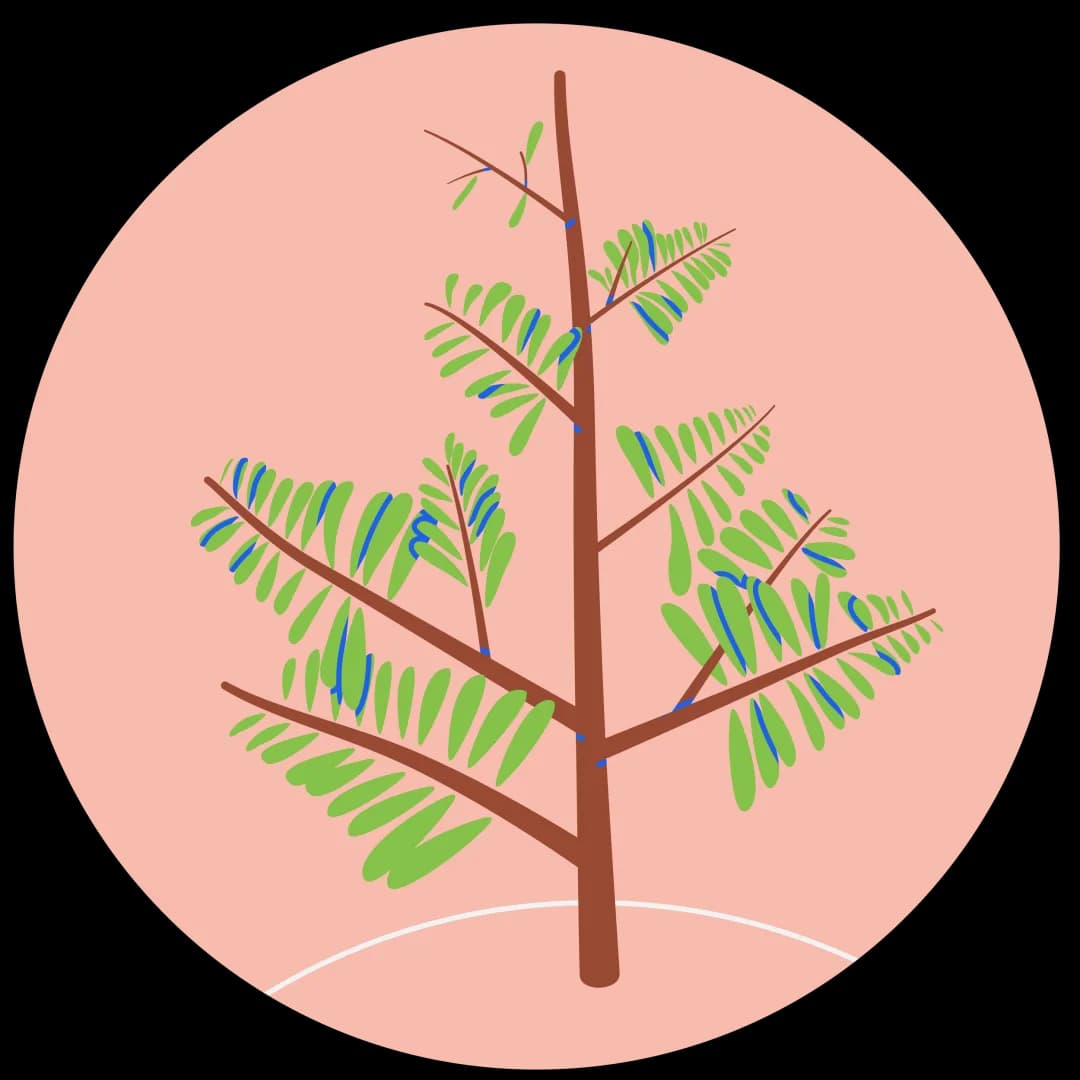
Most students revise the topics they already feel good about, but it’s more useful to start with the ones you find hardest. Your Tassomai Tree shows how well you know each topic, based on the questions you’ve answered: the greener the leaves, the better you know it.
Tassomai’s quizzes keep bringing back the topics you find hard, and when you get a question wrong, Mai Explains tells you why that answer is wrong. You can look back at those explanations on your Tree. Use it to choose what to revise outside the app too, such as extra reading or practice questions.
Find out more about how the Tree works.
Make a plan
Before you start, write a simple plan: which subjects and topics you’ll cover each week, starting with your weakest. Mix up your methods too, such as quizzing yourself, making revision cards and doing practice questions. Switching between topics and methods can help you remember more.
Little and often
The Ebbinghaus forgetting curve shows that if you don’t go back over something, you forget more of it over time. Hermann Ebbinghaus first measured it in the 1880s, and a modern replication found very similar results [3].
A few minutes of quizzing each day helps refresh what you know and makes it stick for longer. A major review of revision techniques gave its top rating to just two: testing yourself and spreading revision out over time [4]. That’s the idea behind Tassomai’s Daily Goal: a short set of quiz questions each day that keeps coming back to the topics you find hardest. Keep this up and you’ll go into your mocks ready to do your best.
Test yourself instead of rereading
Rereading feels productive, but testing yourself works better. In one study, students who practised recalling a passage remembered much more of it a week later than students who spent the same time rereading it [5]. On Tassomai, Mai Helps gives you a hint without the answer, so you still do the remembering yourself. Our guide to retrieval practice explains how it works.
Practise past papers and use the mark scheme
Check which exam board you’re studying for in each subject, ask your teachers for past papers and try some against the clock. Then mark them with the mark scheme to see where the marks come from.
What to do after your mocks
When your results come back, the marked paper is more useful than the grade.
Go through each paper with your teacher’s feedback. For every lost mark, ask: did I not know it, did I misread the question or did I run out of time?
List the topics that cost you the most marks. These are your priorities for the spring.
Ask your teachers which tier and grade they expect for you, so you know what you’re aiming for.
Keep revising little and often, or much of what you learned for your mocks will fade before the summer. Here’s why students forget mock exam material by May.
Parents can help by talking about the results calmly and focusing on the plan, not the grade. On Tassomai, the Parent Dashboard and weekly report show how practice is going after the mocks.
Frequently asked questions
Mock exams are practice GCSE exams that your school sets before the real ones, usually in year 11, so you and your teachers can see what to work on.
There’s no national date, so it depends on your school. Many schools hold year 11 mocks in December or January, and some hold a second set in the spring.
Mock grades don’t count towards your final GCSEs, but schools often use them to set predicted grades and decide which tier you sit.
Revise little and often: test yourself instead of rereading, practise past papers with the mark scheme and focus on your weakest topics.
References
Ofqual. (2025, March 4). Guidance on collecting evidence of student performance to ensure resilience in the qualifications system. GOV.UK. https://www.gov.uk/government/publications/guidance-on-collecting-evidence-of-student-performance-to-ensure-resilience-in-the-qualifications-system/guidance-on-collecting-evidence-of-student-performance-to-ensure-resilience-in-the-qualifications-system
Ofqual. (2026, January 15). What you need to know before your exams. GOV.UK. https://www.gov.uk/government/publications/ofqual-student-guide-to-exams-and-assessments-in-2026/what-you-need-to-know-before-your-exams
Murre, J. M. J., & Dros, J. (2015). Replication and analysis of Ebbinghaus’ forgetting curve. PLOS ONE, 10(7), e0120644. https://doi.org/10.1371/journal.pone.0120644
Dunlosky, J., Rawson, K. A., Marsh, E. J., Nathan, M. J., & Willingham, D. T. (2013). Improving students’ learning with effective learning techniques: Promising directions from cognitive and educational psychology. Psychological Science in the Public Interest, 14(1), 4-58. https://doi.org/10.1177/1529100612453266
Roediger, H. L., & Karpicke, J. D. (2006). Test-enhanced learning: Taking memory tests improves long-term retention. Psychological Science, 17(3), 249-255. https://doi.org/10.1111/j.1467-9280.2006.01693.x
Tagged: Revision, how to revise, GCSEs, Mocks, Mock exams, Student guide